

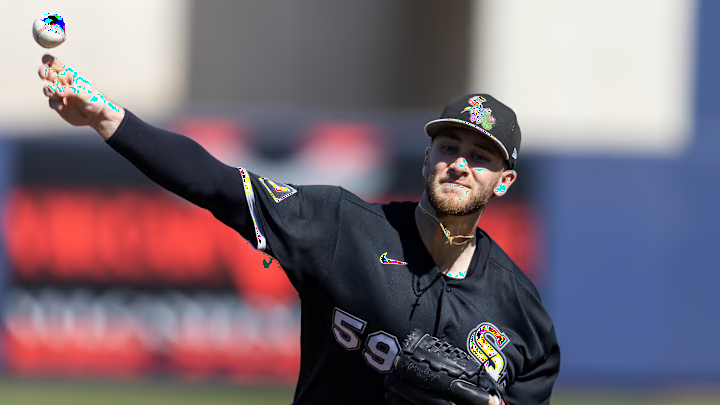
White Sox starter Sean Burke has been on a roller coaster over the past 12 months. This time last year, Burke was competing for a spot in the starting rotation. He was named the Opening Day starter but struggled with consistency at the big league level and was optioned to Triple-A midseason. Burke came back to the big leagues and finished strong, but he enters 2026 without a rotation spot guaranteed. Here are three areas he’ll need to improve to get and keep a rotation spot.
First Inning Struggles
One major area of struggle for Burke in 2025 was the first inning. Across his 22 starts, Burke posted a 5.56 ERA in the first, and as a result, the White Sox used an opener for his outings six times. He often struggled with his command early in games and settled in as it got later. So far this spring, Burke hasn’t allowed a run in his first inning of work. It’s a small sample size and he’s facing lineups with key players resting, but it’s a promising start in an area that gave him trouble last year. The White Sox could always continue using the opener strategy in 2026, but ideally they’d be able to trust Burke in those situations. Improvement early in the game would go a long way toward his future as a rotation mainstay.
Command Inconsistency
There’s no question about Sean Burke’s pure stuff. His mid-90s fastball can touch 97, and his slider and changeup both grade as above average pitches. Burke runs into trouble with his control. His 10% walk rate in 2025 was in the bottom 10% of the league, and poor location in the zone caused too many fly balls and too much hard contact. Burke hopes that moving away from his sinker this year will help his slider work even better, and his fastball command will be crucial. He may always be a pitcher that walks a decent number of hitters, but his strikeout rate is high enough that it can still work. If Burke can cut it down to 7-8% instead of 10% this season and locate better in the zone, he could find more consistent results. So far this spring, Burke has shown a better ground ball rate and softer contact, indicating better in-zone location, but his walk rate remains around 10%. His command will be something to watch as the spring progresses.
Sean Burke tossed a career-high 10 strikeouts yesterday 👏 pic.twitter.com/9QzjVIgQp7
— Chicago White Sox (@whitesox) September 28, 2025
Home Run Troubles
Sean Burke allowed 23 home runs last season, leading all White Sox pitchers. While it wasn’t among the worst totals in the league, it’s a higher number than Burke and the White Sox would’ve liked. The in-zone command struggles may be to blame for this primarily, as he had a tendency to leave his curveball and slider up in the zone. Burke’s fastball plays best up, but he’ll need to work on getting his offspeed pitches down in the zone. Burke gave up a home run on a sinker he left too far over the middle of the plate in his second spring outing against the Brewers, but that’s the extent of the long-balls he’s allowed to this point. If he can improve in the first inning, limit the walks, and keep the ball in the ballpark over the next few weeks, it’ll be his rotation spot to lose, and he’ll have earned his spot on the 26-man roster.
 Add us as a preferred source on Google