

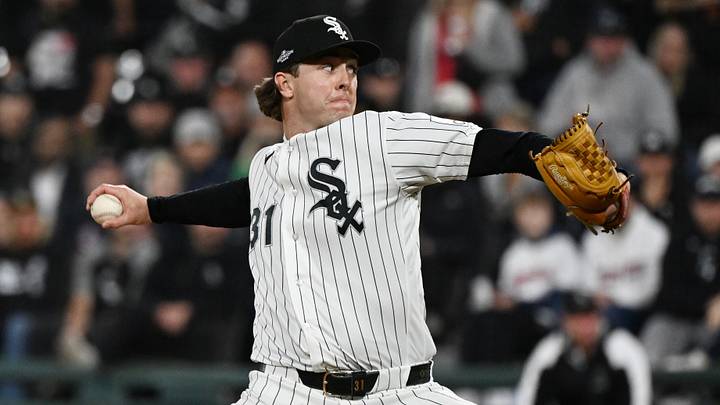
The White Sox entered the offseason with many questions surrounding their pitching staff for 2027. As the GM meetings get going in Las Vegas this week, Chris Getz answered one of the biggest ones in a radio interview on Monday night. After previously indicating that the team still needed to discuss the roles for Grant Taylor and Hagen Smith in 2027, Getz said Monday that Grant Taylor will be moved to the starting rotation for 2027, while Hagen Smith is expected to remain in the bullpen for now. There’s a lot to take away from this decision, but my initial analysis includes mixed feelings.
Grant Taylor joining White Sox rotation comes with many pros and cons
Let’s start with the good. Grant Taylor has been undoubtedly one of the most electric relievers in baseball since his debut in 2025. The former second-round pick features a fastball that can touch triple digits, a pair of nasty breaking balls, and a sinker that grades excellently against right-handed hitters. He’s also shown the ability to excel in a multi-inning role, including an impressive four-inning save in the ALDS. Taylor reached 84 innings this season, so a jump to 120-130 next season isn’t unreasonable. More innings of a pitcher with elite stuff is a good thing in theory, and Taylor has the stuff to be one of the best starters in baseball if he stretches out.
A good starting pitcher is more valuable than a good relief pitcher over the course of the season, and there’s a history of relievers like Clay Holmes and Seth Lugo becoming good starting pitchers. The White Sox even have a couple of their own examples in Chris Sale and Garrett Crochet, who initially came up in the White Sox bullpen and became All-Star level starting pitchers. It makes a ton of sense to try to get the most value out of Grant Taylor that they can, and the reward is potentially huge.
Grant Taylor puts the finishing touches on a 4-inning save 👏 pic.twitter.com/ReKHPRDrkD
— MLB (@MLB) October 3, 2026
On the flip side, the risk is also substantial. Taylor hasn’t started for a full season in his career at any level. He was a starter at LSU but missed a lot of time due to injury, and he struggled to stay healthy in his first two big league seasons. The 84 innings he threw in 2026 were by far his career high. White Sox pitching director Brian Bannister has previously discussed Taylor’s extension numbers, which are some of the highest in the league, and brought up the other pitchers in that category, like Tyler Glasnow and Johan Oviedo, as players who are frequently injured. Taylor moving to the rotation would significantly increase the risk of an injury and the White Sox being without him completely.
In addition, it doesn’t necessarily solve the team’s biggest problems, and, in fact, creates more. The White Sox are in need of dependable innings from their starting rotation behind Sean Burke, and while Taylor has a high ceiling, he’s far from a sure thing. Even with Taylor and Burke penciled in, the team would benefit from adding at least two starting pitchers either via free agency or trade. Taylor’s departure from the bullpen also opens up another hole there. Sean Newcomb is set to be a free agent, and the White Sox now have two high-leverage relief spots to fill. Hagen Smith could ramp up his inning count to help, but there’s a big vacancy there now as well.
The offseason has only just begun, and the White Sox should have financial flexibility to make some additions, but it’s worth remembering who the owner is. The idea that the White Sox are going to go out and spend big on both starters and relievers is probably unrealistic, and that means they’re likely to go into the 2027 season with some major uncertainties. Some of the roles could become more clear in spring training as arms like David Sandlin, Noah Schultz, Tanner McDougal, Anthony Kay, Davis Martin, and Luis Castillo all have roles that are up in the air, but they need to go into camp with a lot more certainty than they have now. The decision about Grant Taylor only seems to create more.
One year from now, we could look back on this and feel that this was the best possible decision the White Sox could’ve made. There’s also a chance it becomes a big mistake. We’ll have to see how the rest of the offseason plays out, but the team is taking a big swing with one of their best arms. Only time will tell if it will pay off.
 Add us as a preferred source on Google