

The MLB draft is a few weeks away, and the Chicago White Sox will spend the next few weeks finalizing their big board. The first item on the agenda is who they should select with the first overall pick. Prior trends from the team can give us an insight into how the White Sox may go about spending their picks in 2026 and what the blueprint to a successful draft looks like.
Current White Sox scouting director Mike Shirley took over the team's drafts in 2020. Looking at the draft history for the White Sox over the last five years, some trends stand out: avoiding high school pitching, valuing on-base percentage for hitters, stacking up on college pitching in the middle rounds, and maintaining player selection balance.
High School pitching avoidance
The White Sox have drafted eight high school players among their 61 draft selections since 2023. Of those eight high school players, only one pitcher was selected: LHP Blake Larson in 2024. If we widen this to the last five years, Noah Schultz and Tanner McDougal make that total three pitchers out of 13 high school players drafted. Injury risk aside, there is more projectability with a high school arm compared to a college arm. However, because they are more projectable, more development is needed to reach that projection, which is risky. The White Sox haven’t shied away from using high picks to draft high school players, but when doing so, they’ve tended to go the position player route for guys who play shortstop or outfield.
College pitching middle rounds arms race
Instead, the White Sox have used the middle rounds (6-15), to load up on pitching. Of the 54 pitchers they have drafted since 2021, 30 have been selected in these rounds. Under this philosophy, they’ve been able to get some top 30 organizational prospects in Mason Adams (13th round, 2022), Shane Murphy (14th round, 2022), and Mathias LaCombe (12th round, 2023). No organization can have too much pitching, so the White Sox have often used these middle rounds to load up on college arms that can move quickly through the system.
On-Base percentage has become a priority
On-base percentage is a statistic teams are starting to value more, and the White Sox draft philosophy over the last three years has reflected that. The 24 college bats they have selected since 2023 as a group had an average on-base percentage of 0.441 in their draft year. We have already started to see the results of this take place at the major league level in Sam Antonacci‘s success. Antonacci carried a .523 on-base percentage in his draft year at Coastal Carolina, and the former 5th round pick currently leads all qualified hitters on the team in OBP. Jacob Gonzalez carried a .435 OBP in his draft year, and he’s been getting meaningful playing time as well while filling in for Munetaka Murakami at first base. Teaching players to get stronger so they can swing harder is easier than teaching plate discipline, and it's led the White Sox to take the opposite approach of the previous rebuild.
Down to their last out, the @WhiteSox win!
— MLB (@MLB) June 23, 2026
Sam Antonacci delivers a two-run walk-off hit 😤 pic.twitter.com/35vlRK0kM4
Balanced draft approach
The organization had drafts in 2021 and 2022 where they went heavier on the arms, but overall, the White Sox have been very balanced in their approach to drafting pitchers and position players. Since 2021, 54 pitchers have been taken compared to 47 hitters. Certain teams have different draft plans. Teams like the Brewers and the Rays are going to go heavy on drafting pitchers and then flip them for position players. The Angels are notorious for drafting guys that they feel can make an immediate impact on the big league club. For the White Sox, the game plan seems to be retooling the farm system through a balanced draft approach.
Successful Draft Blueprint
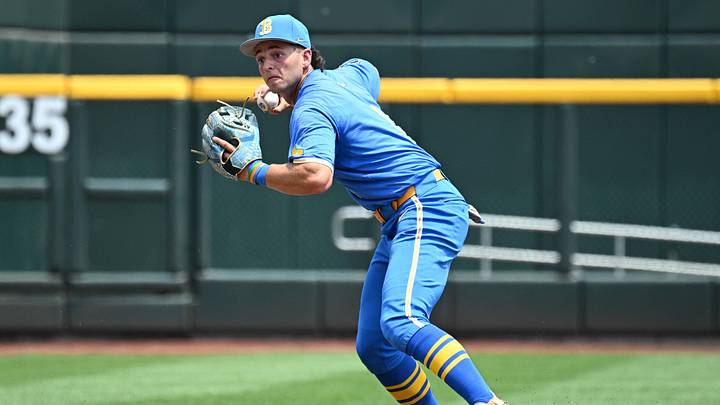
The most important piece of the 2026 draft is nailing this first pick. The decision comes down to whether the team values the polished college player who can make a more immediate impact in Roch Cholowsky or the higher upside Grady Emerson. Both players fit into molds that the team likes. Grady Emerson is a high school player who plays shortstop, and he would continue a run of early prep bats taken by the White Sox. Roch Cholowksy has a career .448 on-base percentage with strong power numbers and low strikeout rates as a full-time player across 3 collegiate seasons at UCLA. Some have speculated that Georgia Tech catcher Vahn Lackey could be in the mix as well, but the White Sox have taken either a shortstop or a left-handed pitcher in every draft under Mike Shirley, and I don't expect that to change now.
The Major League team is desperate for pitching talent, so I don't see the team straying from acquiring arms in those middle rounds. Drafting high on-base percentage bats has been working for the team, and given the drafting track record, this should continue. Draft players that understand the strike zone and then fine-tune the swings to unlock more power. Bleacher Report recently had the White Sox as the 6th best farm system in baseball, so how the team has been drafting in recent years is clearly working as the organization continues growing its talent pool, and fans can look for more of the same this year.
 Add us as a preferred source on Google