

As the offseason winds down and Spring Training gets set to begin, it’s time to reflect back on the White Sox offseason moves. It was a busy winter for Chris Getz and the White Sox, who are seeking to take another large step forward after meaningful progress in 2025. The White Sox will head into camp with a feeling of excitement and satisfaction with the offseason deals that have put them in this position. There’s still some time remaining until Opening Day, and the White Sox could still make another move to address the starting rotation, but let’s rank what they’ve done so far from best to worst:
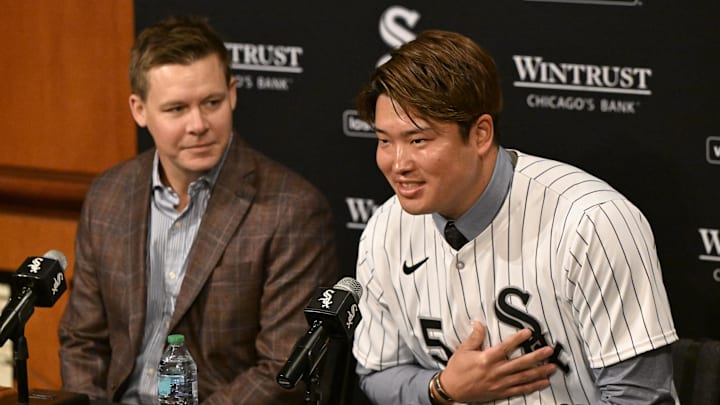
1. Signing 1B Munetaka Murakami for two-years/$34 million
The obvious favorite move around the league, the White Sox unexpectedly landed the Japanese superstar Murakami when his market seemingly fell into their laps. The benefit here is two-fold: the White Sox land a high-upside slugger who could become a premiere power hitter in baseball, and at the same time becomes relevant in a Japanese free agent market they’ve largely sat out of in recent years. The short-term contract limits the risk for the White Sox and gives Murakami two years to establish himself in the big leagues and earn his big payday. This was a no-brainer for the White Sox.
村上宗隆からのメッセージ
— Chicago White Sox (@whitesox) December 21, 2025
A message from Mune pic.twitter.com/Z0J2BtEDWn
2. Signing LHP Anthony Kay for two-years/$12 million
The White Sox struck gold when they signed RHP Erick Fedde to a similar two-year pact back in 2024. Fedde’s strong start allowed the White Sox to flip him at the deadline and land Miguel Vargas, a player they believe is a large part of their core moving forward. They’ll hope for similar success with Kay, who revamped his career overseas the past few years. Kay will immediately slot into the White Sox rotation and provide valuable innings, and a strong first half could lead to an Erick Fedde-type deal that nets the White Sox a future piece or two. For the price, it’s a low-risk, high-reward deal that makes a ton of sense for a rebuilding club.
3. Signing RHP Seranthony Dominguez for two-years/$20 million
If the White Sox want to take a meaningful step forward and win more games in 2026, addressing the bullpen that contributed to the most one-run losses in the league in 2025 was a good move. In Dominguez, the White Sox landed a proven late-inning reliever to support young arms Grant Taylor and Jordan Leasure, and his modest price tag could be appealing to teams looking for a late-inning option at the trade deadline. Dominguez’s stuff can be lethal when he keeps it under control. This deal helps the entire pitching staff, so White Sox fans should feel good about getting it done.
4. Trading RHP Gage Ziehl for RHP Jordan Hicks and RHP David Sandlin
The White Sox got creative with their payroll flexibility in their latest offseason deal, flipping pitching prospect Gage Ziehl to Boston for two intriguing arms. In Hicks, the White Sox get a reclamation project with a history of throwing heat in the back end of a bullpen and recent trial as a starter. All signs indicate he’ll be in the bullpen for the White Sox, and he’ll provide more high-upside support in the late innings. In Sandlin, the White Sox get a starting pitcher with plus stuff that could make his major league debut in 2026. The White Sox gave up very little here and could potentially win big with strong pitching development.
5. Signing OF Austin Hays for one-year/$6 million
After dealing away OF Luis Robert Jr. earlier in the offseason, the White Sox desperately needed a veteran outfielder to stabilize the position group. They got that in Hays, who joins the team after a solid offensive season with Cincinnati in 2025. It’s unclear whether Hays will primarily play right or left field in 2026, but he’ll be in the lineup every day and will help provide a serviceable veteran bat for a young team. I like the signing, and I like Hays’ fit in Chicago, but I don’t feel like this signing moves the needle too much in terms of present or future wins. It should help make the team more watchable this season, however.
6. Signing LHP Sean Newcomb for one-year/$4.5 million
This is easily the move with the most variance for me, and my ranking of it depends on Newcomb’s role. His career statistics and track record suggest he’s best suited for a bullpen role, in which case I’d like the low-risk depth he provides from the left side. However, the White Sox have indicated that Newcomb will be given an opportunity as a starting pitcher in camp, and the team has yet to add a much-needed starting pitcher to occupy the spot. If the result is Newcomb in the rotation, I don’t feel great about this move, though the minimal salary shouldn’t impact the team too much. This placement could certainly change pending the results of the Spring Training competition
7. Trading OF Luis Robert Jr. for IF Luisangel Acuna and RHP Truman Pauley
There’s really a large gap between this and any other moves the White Sox have made this offseason. Sure, the White Sox went out and spent the money they saved after trading Robert, but they shouldn’t have needed to save that money. The White Sox were near the bottom of the barrel in payroll with Robert’s $20 million on the books, and would still be in the bottom half of the league with Robert on the books. I’m not as high on Acuna as the White Sox seem to be, so the return, to me, is insignificant. The benefit to having Robert on the roster and hoping for a healthy and strong start to the season well outweighed the risks, but the White Sox felt the opposite. Time will tell if the move paid off.
 Add us as a preferred source on Google